5 minutes
10 June 2026
A guest blog by Green Standard Schools member Cork English College
Being environmentally conscious doesn’t mean making huge lifestyle changes overnight. In fact, it’s often the small, consistent actions that make the biggest difference.
At Cork English College, we are proud to be a Green Standard School. This means we are committed to reducing waste, saving energy, and encouraging more sustainable habits across the school. From reusing misprinted paper in classrooms to offering reusable water bottles for students, we are always looking for ways to minimise our environmental impact.
But sustainability is a shared effort, and our students play a key role too.
Here are five simple and practical things we ask our students to do, and that we encourage you to copy in your language school!
1. Bring a reusable cup and water bottle
Switching to a reusable cup or bottle is one of the easiest changes we can make for the environment. Not only do single-use cups and plastic bottles create a lot of unnecessary waste, but reusable travel mugs also keep drinks hot for longer, so you can enjoy your coffee without it going cold.
Most schools have a coffee machine or water fountain, so be sure to ask students and staff to bring a reusable cup or bottle. You can even provide or sell branded travel mugs, cups and bottles to promote your school and give students a souvenir of their stay.
Did you know? The environmental impact of bottled water is up to 3,500 times greater than tap water. This is because plastic bottles are made of oil, take energy and water to produce, and create microplastics and ocean pollution if they aren't recycled.
Tip: stainless steel, glass and aluminium are the safest and most sustainable materials for water bottles.
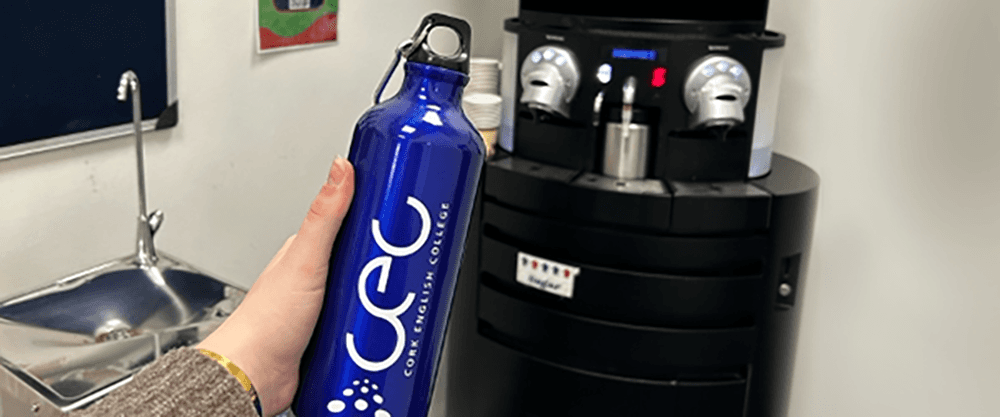
Photo by Cork English Centre
2. Switch off the lights
Energy conservation is something we can all contribute to with very little effort. Ask your students to take a moment to check the lights are off whenever they are the last person leaving a classroom, bathroom or shared space. Signage can help everyone remember too.
Switching off the lights might seem like a small action, but over time it helps reduce electricity use across the school. When everyone takes responsibility, these small habits can lead to a big reduction in energy waste - which is great for the environment and school bills.
Did you know? LED bulbs use 80% less electricity, so make the switch if you can!

3. Choose public transport or lift sharing
Transport is one of the biggest contributors to carbon emissions, so how students and staff travel to school has a real impact. Ask those who usually drive to consider taking the bus or arranging a lift share with colleagues or classmates who live nearby.
Not only is this a more sustainable option, but it can reduce costs and make the daily journey commute social and enjoyable too.
Did you know? Walking or cycling short distances reduces travel emissions by 75%, taking a train instead of a car for medium distances cuts emissions by 80% and if you take the Eurostar instead of flying, you’d cut your journey’s footprint by around 97%! (Our World in Data)

Photo by Timur Shakerzianov on Unsplash
4. Say no to single-use plastics
Single-use plastics create environmental pollution worldwide. Items like plastic cutlery, straws, takeaway containers and wrappers are often used for just a few minutes but take years to break down, creating micro plastics and endangering human and wildlife health.
By making simple swaps, like bringing your own reusable fork, lunch container or shopping bag, your students and staff can significantly reduce their plastic waste. These small choices quickly become habits and have a lasting positive impact.
Did you know? Only about 9% of plastic waste is recycled, 12% is burned and the remaining 79% is in landfills, on the ground or in the ocean. Print and display Oceana's information sheet in your school to help raise awareness.

Photo by Sandra Harris on Unsplash
5. Dispose of waste properly
For items you cannot avoid or can no longer reuse, be sure to dispose of them correctly.
Place bins for different types of waste around your school and clearly mark what each bin is for, so students of all language levels can use them properly.
Did you know? Steel, aluminium and glass can be melted down and remoulded again and again without reducing quality. Be sure to choose glass bottles and aluminium drinks cans instead of plastic whenever possible.
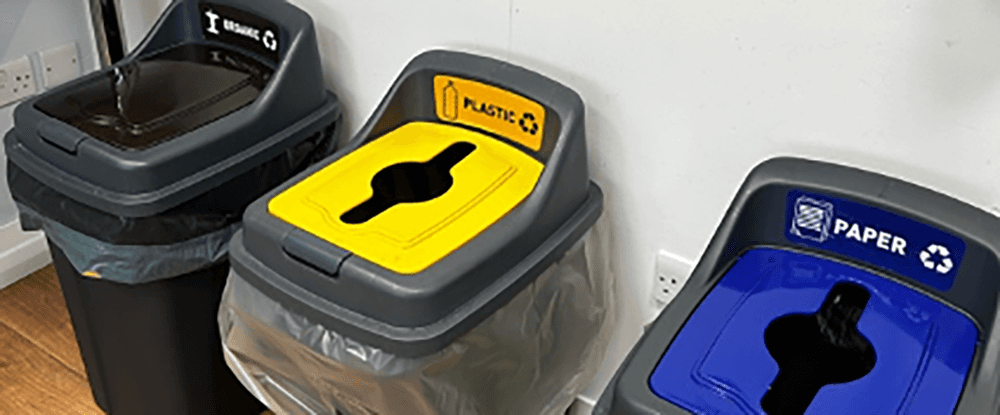
Photo by Cork English Centre
Being more environmentally conscious doesn’t have to be difficult. By making a few simple changes to your daily routine, you can contribute to a more sustainable future.
At CEC, every small action counts. Together, as a school community, we can create positive habits that not only benefit the environment but also inspire others to do the same.
We hope you find these tips helpful and that many more language schools around the world join our efforts in taking environmental responsibility!